Field work in Southern California
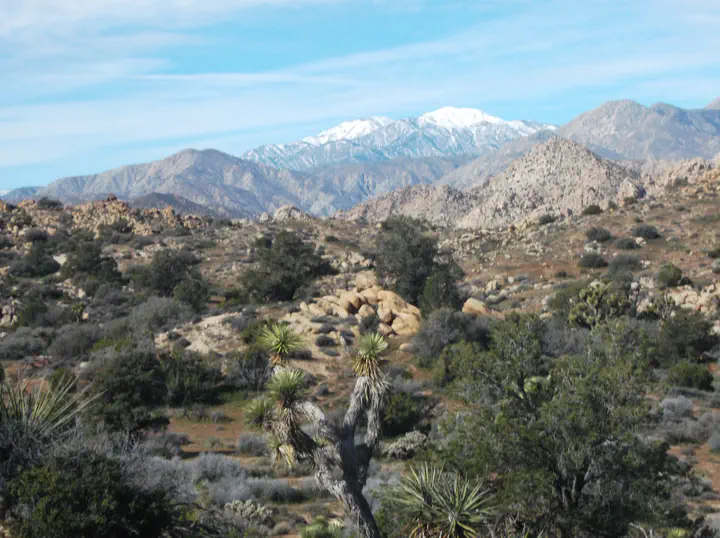
Five members of the MEEP lab took a trip to the Mojave and Colorado (Sonoran) Deserts to collect moss samples for the deserts project. This project spans field sites across the Great Basin, Mojave and Sonoran Deserts; stay tuned for updates on the research!
This fieldwork supports the masters theses of Paris Hendershot and Kanika Kolpe, and the final project of post-bacc reseracher Abbey Schedler. Paris and Kanika are investigating physiological responses of Syntrichia mosses in extreme environments, read more about their projects here! Abbey is researching the microbiome of desert biocrusts, learn more here!

Read below to hear from each project member about their favorite sights and experiences from the trip!
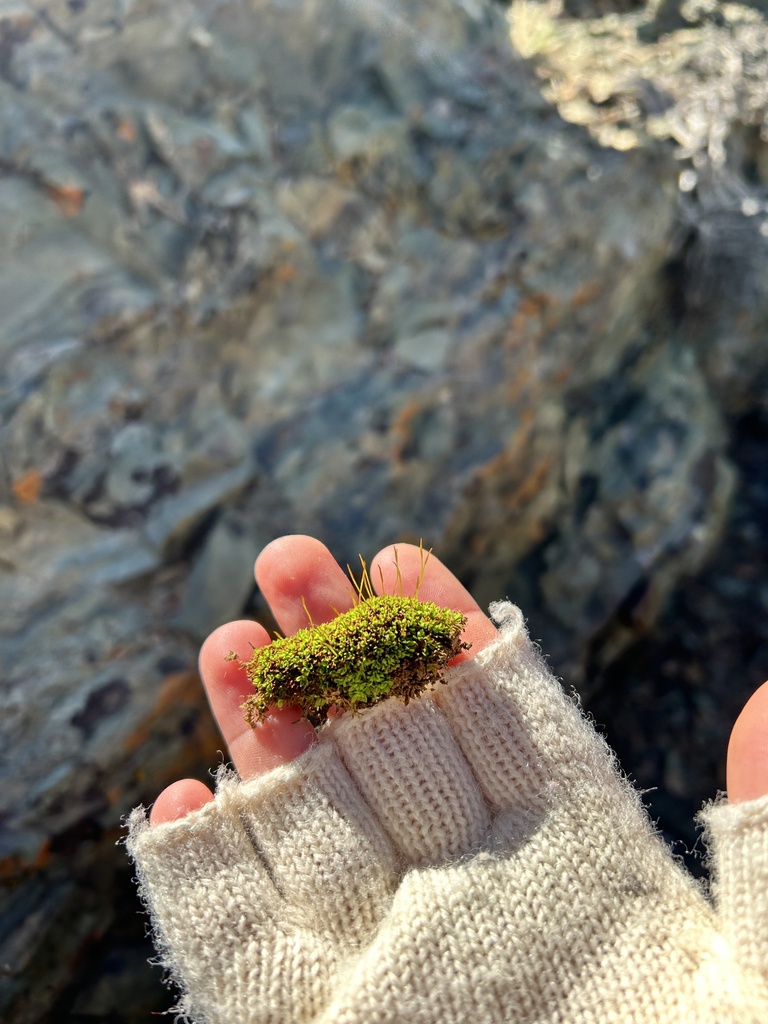
Grad students Paris Hendershot and Kanika Kolpe both enjoyed surveying an impressive array of moss covered boulders near the Burns Pinon UC reserve. Moss ID in the field can be tricky and part of the fun (and sometimes frustration) is the mystery of deciding a preliminary ID between two species that look very similar. In our case, Grimmia (not our target) and Syntrichia, (our target) were the cause of many mix-ups. The students on the deserts project became more familiar with the differences as the fieldwork progressed. Below our grad students highlight a typical case of what it’s like to determine a preliminary moss ID in the field and how tricky it gets!


Abbey and MEEP undergrad Nio Gonzalez rode the ultimate moss high when coming across a magnificent moss wall in Plum Canyon (Borrego Springs, CA). The two climbed the wall to collect the last bit of samples from the Sonoran Desert before the team moved on to the Mojave the next day.


We documented all plants we saw with iNaturalist. Check out our field trip iNat project!

Thanks for tuning in to the MEEP blog!
Abbey Schedler
MEEP Lab NSF RaMP Scholar.